
A Workforce in Crisis: Independent Driver Guild's New Survey of 1,300+ Area Rideshare Drivers
Drivers Are Working More Hours—But Falling Further Behind as Take-Home Pay Plummets and Anxiety Soars
Gas Prices, Skyrocketing Costs, and Low Pay Are Crushing Rideshare Drivers
New York, NY — The Independent Drivers Guild (IDG), the nation’s largest rideshare driver organization, today released the results of a sweeping new survey of over 1,300 Uber and Lyft drivers across New York, New Jersey, and Connecticut. The findings reveal a workforce in crisis across the tri-state area. As gas prices, insurance and other operating expenses skyrocket, rideshare drivers’ take‑home pay has plummeted, leaving drivers and their families desperate. More than 200,000 workers across New York, New Jersey, and Connecticut make their living as Uber and Lyft drivers, including more than 80,000 in New York City alone.
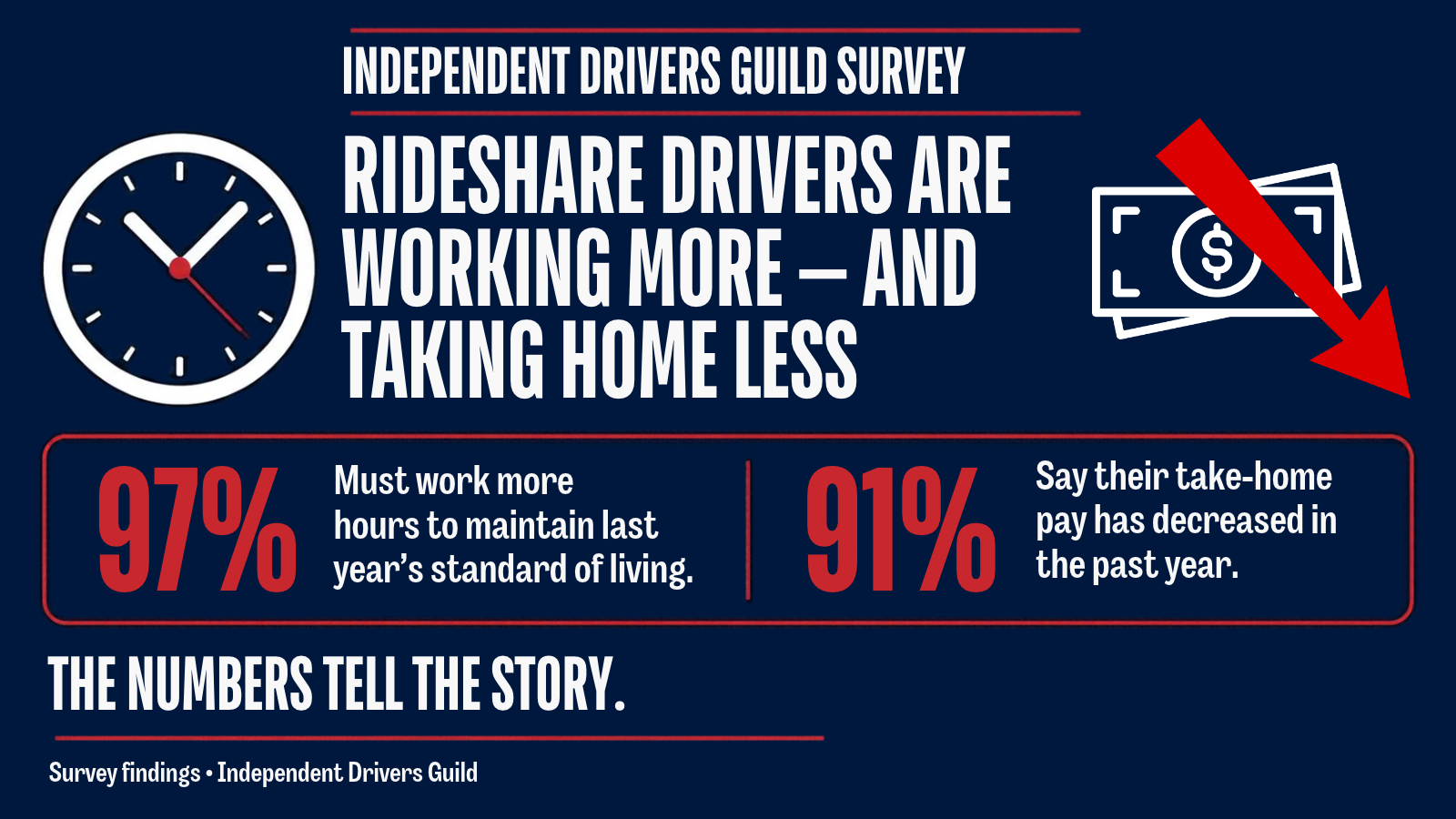
- 97% of drivers report they must work more hours just to maintain last year’s standard of living – with 86% of drivers reporting they must work significantly more hours to do so.
- More than 9 in 10 rideshare drivers are experiencing a critical drop in their take home pay (net earnings) compared to one year ago, leaving them unable to cover basic living expenses or support their families. For the drivers, it is a massive pay cut. It’s not sustainable.
- Drivers overwhelmingly report that current pay rates are not enough to support themselves or their families.
The data paint a stark picture of widespread financial distress for rideshare drivers. Uber and Lyft drivers need a pay increase to keep up with rising costs, and city and state leaders need to stand with drivers to demand action. Even in New York City, where the Independent Drivers Guild secured the protection of a minimum pay rate after expenses with annual cost-of-living increases, the cost-of-living increase for 2026 was just 3.4%, far from keeping pace with rising costs. The federal government recognized the extreme impact of increased vehicle operating costs and made a rare mid-year change to increase gas mileage reimbursement rates. Rideshare drivers need immediate action to increase their pay rates too.
“Rideshare drivers across the tri‑state region are being crushed. Gas prices and expenses have skyrocketed, and take-home pay has plummeted. These numbers reflect real families, real stress, and real hardship,” said IDG President Brendan Sexton. “Drivers are doing everything they can—working longer hours, cutting back on spending—but the math simply doesn’t add up. Uber and Lyft driver pay rates must be increased to keep up with rising costs, and our city and state officials need to stand with drivers to demand action.”
“I’m working longer hours and putting more miles on my car, but I’m taking home less. Gas, insurance, and other vehicle expenses are eating up more of what I earn. Every time I fill up the tank, more of my pay disappears. Drivers are the ones absorbing these costs. We need our pay to keep up with the real cost of doing this job,” said Dennis, an IDG member and full-time rideshare driver based in Queens.
A Workforce in Crisis: Key Findings
Drivers Are Working More Hours—But Falling Further Behind
- 97% of drivers report they must work more hours just to maintain last year’s standard of living – with 86% of drivers reporting they must work significantly more hours to do so.
- 85% worry about having to work more hours but still falling behind.
Take‑Home Pay Has Plummeted
- Despite putting in longer hours, 91% of drivers say their take‑home pay has decreased compared to a year ago, with 82% reporting that their earnings decreased significantly.
- A staggering 92% say current pay rates are not enough to cover basic expenses and support themselves or their families.
Gas Prices, Skyrocketing Costs Are Crushing Drivers
High gas prices have reduced take-home pay for 95% of drivers compared to a year ago.
- 86% say rising gas prices have significantly reduced their take‑home pay compared to a year ago.
More than 9 in 10 drivers say vehicle insurance, car payments, and repairs all cost more than they did a year ago.
- 76% report vehicle insurance costs are much higher than last year.
- 3 in 4 drivers say car payments, maintenance, and repair costs are much higher than last year.
Widespread Financial Insecurity; Drivers Under Stress
The survey shows the human toll of the crisis.
- 9 in 10 drivers are very concerned about paying bills and making ends meet.
- Two-thirds fear falling behind on their bills or debt (over 66%), and more than half (56%) are concerned they will be unable to make their rent or mortgage payment.
- Drivers report deep financial worries, including:
- Being unable to cover emergency expenses (57%)
- Not being able to afford food or essentials (55%)
- 1 in 3 drivers are worried about losing their vehicle (34%).
Compared to a year ago:
- 71% struggle more to pay household bills.
- 67% report increased stress or anxiety.
- 63% have cut back on personal or family spending.
- 46% have considered leaving rideshare work altogether
IDG: “Drivers are being pushed past the breaking point.”
IDG emphasized that the crisis is not limited to one city or one company—it is systemic across the rideshare industry.
“Drivers are telling us loud and clear: the current pay rates are not enough to survive,” said Sohail Rana, a longtime driver who now oversees IDG’s New Jersey operations. “It’s time for the rideshare companies and policymakers to act. Drivers need fair pay that reflects real‑world costs, and they need it now.”
Gas Prices, Operating Costs On the Rise
Gas prices increased over 62% from January to May in the tri-state area and the price is still up more than a dollar per gallon compared to a year ago, but driver pay rates have not seen a similar increase.
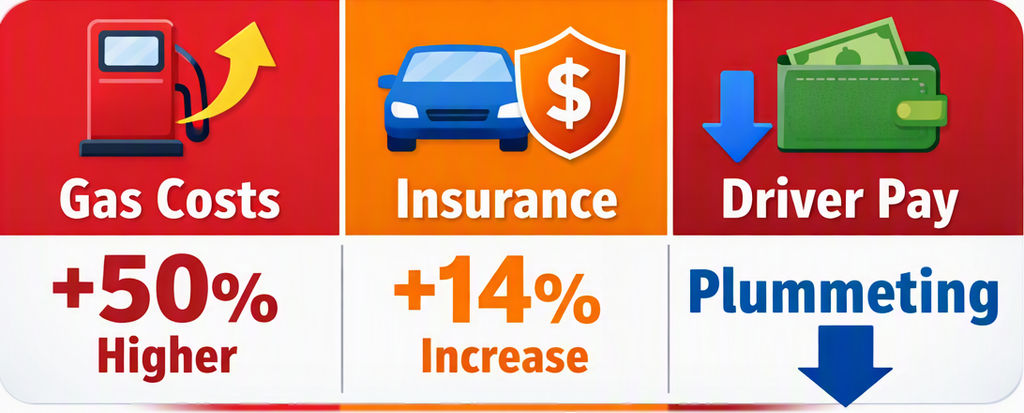
Other major operating costs have gone up, too, including vehicle costs, the price of repairs, and the cost of collision and liability insurance. The cost of rideshare driver insurance in the US has increased by more than 50% over the past three years, and New York City’s mandated insurance saw a single-year increase of over 14% this year. But Uber and Lyft have failed to increase rideshare driver pay to keep pace with increased operating expenses.
Uber & Lyft Drivers’ “Massive Pay Cut”
“For the drivers, it is a massive pay cut. It’s not sustainable. They can’t make ends meet,” added Sexton. “Drivers are the backbone of our transportation system. They deserve dignity, stability, and a fair day’s pay for a hard day’s work.”
In March 2022, the last time that gas surpassed $4 per gallon prior to this year, Uber and Lyft both enacted fuel surcharges on rideshare trips, with 100% of proceeds going to the drivers. But the companies have not enacted pay increases or a surcharge to help drivers cover costs in 2026.
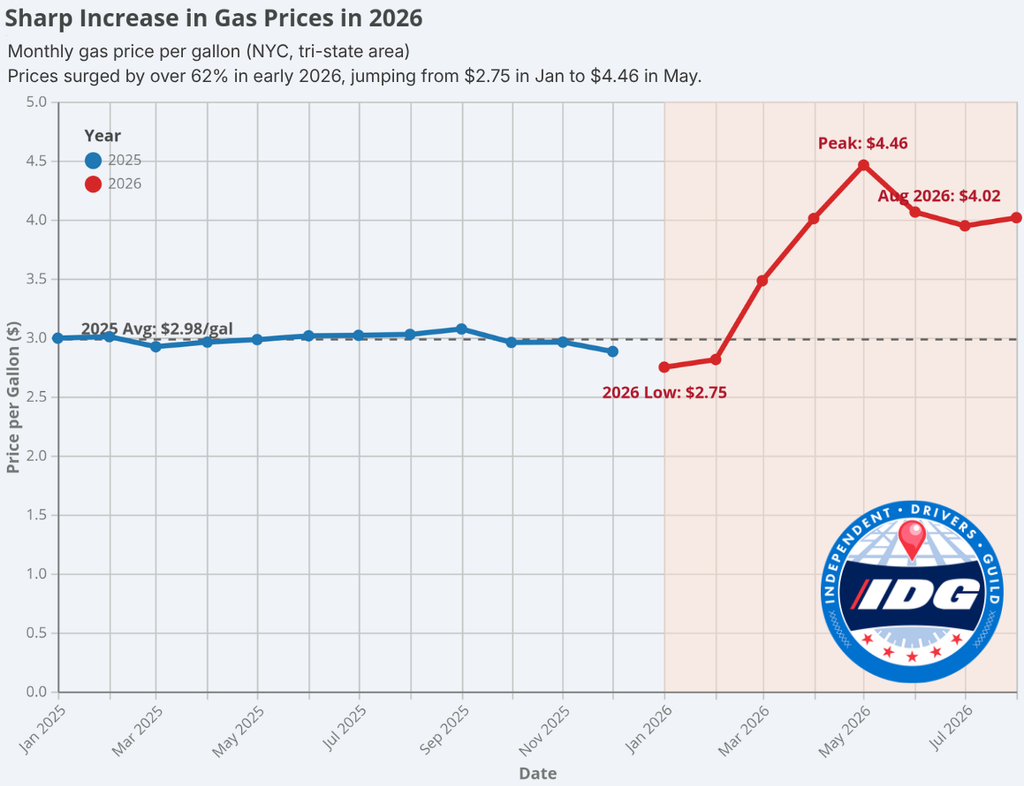
Source: U.S. Energy Information Administration monthly average retail price per gallon for regular grade gasoline for the New York City metropolitan tri-state area.
About the Independent Drivers Guild
The Independent Drivers Guild (IDG) represents and advocates for hundreds of thousands of U.S. rideshare drivers, including more than 200,000 for‑hire vehicle drivers across New York, New Jersey, and Connecticut. IDG is a non-profit organization that advocates for drivers’ rights, safety, fair pay, benefits and the right to unionize. IDG has won landmark benefits and protections that put billions of dollars in drivers’ pockets, including the nation’s first minimum pay standard for New York rideshare drivers, in-app tipping in the Uber app, access to restrooms at airport ride-hail lots, and a wide range of health, wellness, and benefit programs designed specifically for FHV drivers, including free mental health counseling. IDG continues to fight for a more just rideshare industry. The Guild is affiliated with the IAM Union (Machinists Union), an AFL-CIO member union that has organized New York’s black car for-hire vehicle drivers for decades.


